

Risk Management Strategies for Mining Operations
TL;DR
Mining risk management is the structured process of identifying, assessing, controlling, monitoring and reviewing risks across safety, operations, environment, compliance and asset reliability. The strongest programs combine site-wide risk governance, frontline hazard identification, data-backed monitoring, clear controls with escalation paths, and continuous review.
In practice, this means: identify the highest-consequence risks first, rank them by likelihood and impact, apply controls using the hierarchy of control, monitor leading indicators rather than waiting for incidents, and use inspection technology to detect issues before failure. For mines managing mobile plant hazards, autonomous thermal inspection can reduce tyre and vehicle-related risk exposure while producing objective, timestamped records that support maintenance, investigation and compliance processes.
Quick-reference table: mining risks, consequences and strategic controls
| Risk Category | Typical Examples | Potential Consequences | Primary Controls | Monitoring Tools |
|---|---|---|---|---|
| Worker health and safety | Vehicle interactions, fatigue, dust exposure | Injury, fatality, regulatory action | Exclusion zones, fatigue management, PPE | Near-miss reporting, health surveillance |
| Mobile plant and tyre failure | Overheating, belt separation, fire precursors | Tyre fire, road closure, equipment damage | Maintenance routines, TPMS, thermal inspection, escalation plans | Pitcrew AIS autonomous thermal screening, pressure monitoring |
| Geotechnical instability | Pit wall movement, subsidence | Collapse, production loss, fatality | Slope design, monitoring, exclusion zones | Radar, prism surveys, piezometers |
| Environmental incidents | Tailings seepage, dust, water contamination | Licence suspension, rehabilitation costs | Containment, water management, monitoring | Environmental sampling, satellite imagery |
| Regulatory non-compliance | Incomplete records, missed inspections | Fines, stop-work orders, reputational damage | Audit programs, documented procedures, automated inspection records (e.g. Pitcrew AIS) | Compliance tracking systems |
| Financial and market pressure | Commodity price drops, cost inflation | Project deferral, workforce reduction | Hedging, cost control, scenario planning | Financial reporting, market analysis |
What is mining risk management?
Mining risk management is the coordinated system used to identify uncertainty and hazards that could affect people, production, assets, environment or compliance. A hazard is a source of potential harm. Risk is the likelihood and consequence of that harm occurring. A control is any action or measure that eliminates or reduces the risk.
Mining demands a more rigorous approach than most industries. Remote sites, heavy mobile equipment, high-energy environments, changing ground and weather conditions, and strict regulatory oversight all compound exposure. Risk management must operate across the full asset life cycle: planning, development, operations, maintenance and closure.
Why a strategic approach matters more than reactive response
Incident-only thinking means lagging indicators arrive after harm, downtime or loss has already occurred. A preventive approach delivers fewer injuries, less unplanned downtime, lower maintenance costs, a stronger regulatory position and improved workforce confidence. Aligning operational continuity with safety and compliance, rather than treating them as separate goals, is what separates mature operations from reactive ones.
A practical framework for managing risk in mining
-
01
Identify hazards and failure points
Identify risks through inspections, task observations, incident history, maintenance data, worker consultation, OEM guidance and environmental monitoring. Look beyond obvious physical hazards to include process failures, data gaps, human factors and contractor interfaces. Some defects, such as tyre thermal anomalies, aren’t visible during routine manual checks.
-
02
Assess likelihood and consequence
Rank risks using a risk matrix or your site’s methodology. Assess severity of harm, operational impact, detectability, exposure frequency and control effectiveness. Account for both acute events and slow-developing failure modes that may progress unnoticed between inspections.
-
03
Select controls using the hierarchy of control
The hierarchy runs from most to least effective: eliminate, substitute, engineer, administrate, PPE. Prioritise engineered and system-level controls over reliance on human vigilance alone. For tyre fire risk, combine inflation discipline, scheduled maintenance, thermal screening alongside TPMS, and trigger-based response plans rather than relying on spot checks only.
-
04
Implement controls in operations, not just on paper
Embed controls into SOPs, TARPs, shift handovers, maintenance workflows, contractor onboarding and reporting lines. Every control needs a responsible person, a review frequency and an escalation rule. Paper-only controls create a false sense of security.
-
05
Monitor, review and improve
Mine conditions change constantly. Trigger reviews after incidents, near misses, control failures, seasonal shifts, production changes, fleet changes or new regulations. Leading indicators and trend data serve as early warning signals that something is drifting before it fails.
Best risk management strategies for mining companies
Build a site-wide risk register that is current, prioritised, owned by accountable leaders and tied to actual tasks and assets. Separate enterprise-level risks from task-level hazards while keeping them connected through common controls.
Focus on critical controls for high-consequence events: vehicle collisions, slope failure, fire, loss of containment and tyre failure on heavy mobile equipment. Document each control’s purpose, performance standard, verification method and failure response.
Track leading indicators such as overdue inspections, repeat defects, abnormal heat events, maintenance response times and near-miss frequency. These help teams act before an incident, not after one. Standardise inspections to reduce the variability, sampling gaps and poor audit trails common in purely manual models.
Connect inspection outputs to your CMMS, fleet management systems, maintenance planning and TARPs. Data only has value if teams can act on it quickly. And strengthen emergency preparedness through scenario planning, drills, escalation paths and clear communications protocols.
Where inspection technology strengthens risk management
Traditional inspection intervals miss developing faults
Some high-risk defects develop between scheduled inspections. Tread separations and thermal anomalies can progress to failure within days. Intermittent manual checks may miss early signals, particularly in fast-moving or remote operations where unplanned downtime carries steep costs.
Autonomous thermal inspection supports risk reduction
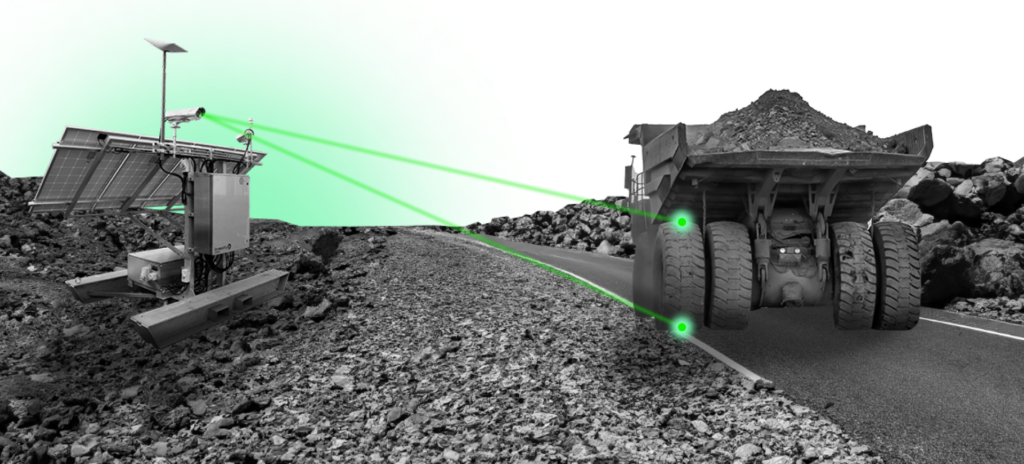
Pitcrew AIS is a roadside autonomous thermal inspection system that scans haul truck tyres as vehicles pass at speed. There’s no need to stop trucks. The system provides continuous, repeatable screening with objective thermal comparison and faster detection of abnormal heat patterns. AI inference runs on thermal imagery at the edge, reducing bandwidth requirements for remote mine deployment and maintaining operation during connectivity loss.
Tyre and fire risk as a controllable operational hazard
Tyre-related risk is both a safety and productivity issue. A single OTR tyre fire costs between US$500,000 and US$2 million when direct and indirect impacts are combined, with haul roads closed for 8 to 16 hours per event. Heat-related tyre faults can be detectable before failure. Pitcrew deployment data indicates median lead time of more than 72 hours before some faults progress to failure, with some detected weeks earlier. That lead time supports planned intervention, fewer road closures and reduced catastrophic asset events.
Compliance and audit benefits
Automated inspection records support due diligence, internal reviews, investigations and consistency across shifts. Complete coverage with objective logic and an audit-ready trail strengthens governance, though it doesn’t replace site obligations or human decision-making.

Choosing risk management providers or systems
Assess providers against mining-specific experience, ability to operate in harsh and remote environments, integration with existing systems, data quality, support for site procedures, and evidence of reliability. The best providers fit existing operational controls rather than creating parallel systems.
Key questions to ask: Does it address a clearly defined risk with measurable impact? Can it provide repeatable, objective data? Will site teams trust and use the output? Can it integrate into maintenance and compliance processes? Does it work when connectivity is limited? Is there a clear escalation path from detection to action?
Common gaps that weaken mining risk management
Assess providers against mining-specific experience, ability to operate in harsh and remote environments, integration with existing systems, data quality, support for site procedures, and evidence of reliability. The best providers fit existing operational controls rather than creating parallel systems.
Key questions to ask: Does it address a clearly defined risk with measurable impact? Can it provide repeatable, objective data? Will site teams trust and use the output? Can it integrate into maintenance and compliance processes? Does it work when connectivity is limited? Is there a clear escalation path from detection to action?
Overreliance on paperwork
Outdated risk assessments, unverified controls and low frontline engagement create a gap between documented procedures and field execution.
Inconsistent inspection quality
Subjective observations, incomplete coverage and limited traceability increase exposure, particularly in mobile plant and tyre management.
Poor follow-through
Identification without action creates false confidence. Unclear ownership, delayed maintenance response and weak escalation thresholds are warning signs.
Siloed functions
Treating risk, maintenance and operations as separate domains undermines shared accountability and shared response.
Making risk management an operating discipline
Effective mining risk management isn’t a one-off assessment. It’s an operating discipline. The strongest strategies identify high-consequence risks early, prioritise critical controls, measure control performance, integrate risk detection with maintenance response, and review continuously. For mines managing mobile plant and tyre-related hazards, autonomous thermal inspection can strengthen early detection, consistency and record-keeping within a broader risk program.
Frequently Asked Questions
The 5 P’s are Predict, Prevent, Prepare, Protect and Perform. Terminology varies between organisations, but in mining: predict hazards through data and inspection, prevent incidents by applying controls, prepare response plans for residual risks, protect people, assets and environment through layered defences, and perform through monitoring and continuous improvement.
Enterprise Risk Management rests on four pillars: Governance, Risk Assessment, Risk Response, and Monitoring and Reporting. In mining terms, governance sets accountability and ownership structures. Assessment identifies and ranks threats across safety, operations and compliance. Response applies controls and treatment plans matched to risk severity. Monitoring checks that controls remain effective and provides the data needed for decisions.