

How to Reduce Costs in Mining Operations
TL;DR
Heat is the earliest honest signal a heavy vehicle gives before something fails. A belt separation inside an off-the-road tyre casing generates friction heat long before the tread shows a bulge, and a dragging brake runs hot long before smoke appears. Thermal imaging reads that signal on every pass.
Key Takeaways
- Tyres are the second-largest haul truck operating cost after fuel, representing roughly 20–25% of operating expenditure at many mine sites.
- A large ultra-class haul fleet spends tens of millions of dollars a year on tyres, and premature removals plus unplanned failures create a substantial recoverable cost pool.
- Haul road quality, inflation discipline and tonne-kilometres-per-hour (TKPH) compliance are the highest-impact controllable levers for extending tyre life.
- Continuous condition monitoring does not prevent every defect, but it converts costly unplanned tyre failures into planned maintenance events.
- All cost and savings figures are site-dependent and should be modelled against fleet size, commodity, tyre contracts, road conditions and failure history.
Why Are Tyres a Major Opportunity to Reduce Mining Costs?
Tyres are a major cost-reduction opportunity because purchase price accounts for only 20–35% of true lifecycle cost, with the remaining 65–80% tied to operating impacts, maintenance, downtime and end-of-life outcomes.
The numbers set the size of the prize. Tyres represent roughly 20–25% of haul truck operating expenditure, second only to fuel. A single ultra-class Off-The-Road (OTR) tyre costs approximately US$30,000–70,000 or more depending on size, brand, compound and contract terms. Across a truck’s operating life, total tyre spend roughly equals the truck’s original capital cost.
Most of that spend is not being fully realised. Industry research indicates that an estimated 90% of ultra-class mining tyres never reach their intended operating life, and 33–49% of all removals are premature. That gap between design life and achieved life is the recoverable pool.
What follows is a ranked view of where controllable money actually sits in a haul fleet. None of these levers involve deferring essential maintenance, cutting inspection quality or accepting more safety risk. The savings come from tyres surviving longer and failing on your schedule rather than theirs.
Which Mining Cost Levers Deliver the Greatest Tyre Savings?
The strongest evidence supports prioritising haul road maintenance first, followed by inflation control, TKPH compliance, operator practices, fitment and rotation, retreading, and continuous condition monitoring.
It helps to split these into two groups. Prevention levers such as roads, inflation and load management decide whether a tyre reaches planned life at all. Conversion levers such as early defect detection decide what happens once damage has started. Both matter, but spending on detection while running poor roads produces alerts, not savings.
Priority order shifts by site. A high-altitude copper operation with long downhill hauls has a different dominant failure mode to a Pilbara iron ore site running short, fast cycles. The framework tells you where to look first.
How Does Haul Road Maintenance Reduce Mining Costs?
Haul road maintenance is usually the largest controllable tyre-cost lever, because cuts, impacts, heat and vibration from poor road surfaces directly shorten tyre life.
Caterpillar data attributes up to 75% of all tyre failures to cuts and impacts associated with road debris. The spread in outcomes is stark: the same tyre size achieves under 4,000 hours at a poorly managed site and more than 10,000 hours at a well-managed one.
Practical focus areas are debris removal, grading quality, drainage and surface maintenance, plus active management of sharp rock, potholes and impact hazards. Cross-reference road inspection records against tyre removal reasons to find the repeat offenders. Haul road condition sits at the centre of broader operational risk management, and no monitoring investment overcomes persistently bad roads.
How Does Inflation Discipline Reduce Mining Maintenance Costs?
Holding tyres at their specified operating pressure extends tread life, reduces heat generation and improves fuel efficiency.
A 10% reduction in inflation pressure costs up to 27% of tread life, and up to 40% of mining tyres run at least 10% below target at any given moment. Correcting inflation alone extends tyre life by approximately 15% and improves fuel economy by around 2%. For a 50-truck ultra-class fleet, that models to roughly US$1.2 million annually, subject to site conditions and tyre programme performance.
A Tyre Pressure Monitoring System (TPMS) monitors internal pressure and cavity temperature. The Pitcrew Autonomous Inspection System (AIS) complements TPMS rather than replacing it, monitoring external tread surface temperature and the visible thermal signatures associated with structural damage. What ties either system to savings is process: verified cold-versus-hot pressure checks, a defined leak response and named accountability for escalation.
Why Do TKPH Compliance and Payload Control Matter?
Keeping tyres within their tonne-kilometres-per-hour rating limits internal heat build-up that accelerates structural damage and belt separation.
TKPH combines load, speed, haul distance and ambient conditions. Excess payload, sustained high speed, extended hauls and hot ambient temperatures push a tyre past its thermal limit, and the resulting internal damage develops without an obvious external warning during routine checks. By the time it is visible, the casing is usually gone.
Match tyre specification to actual duty cycle rather than the original design assumption. Review payload distribution, loading consistency and speed compliance, and re-check TKPH exposure whenever routes or pit configurations change. Dispatch, fleet management and tyre data need to be read together.
How Can Operator Training Extend Tyre Life?
Targeted operator training extends tyre life by reducing avoidable impacts, harsh manoeuvres, overspeed events and inconsistent loading. Immersive Technologies data indicates an average 10.4% tyre-life improvement from focused operator programmes.
The content that pays is specific: avoiding road-edge strikes and sharp turns, eliminating wheel spin and unnecessary braking, reporting hazards before the next truck hits them, and understanding how payload and speed translate into tyre temperature. Treat it as an ongoing discipline supported by data and supervisor coaching, not a single induction module.
How Do Rotation and Fitment Practices Improve Tyre Economics?
Planned rotation, correct fitment and well-timed removal decisions improve average fleet tyre life by roughly 5–15%.
Match position, compound and tread type to axle loads and operating conditions. Rotate before uneven wear erodes remaining value. Track history by tyre position, vehicle, route and removal reason, then use removal inspections to work out whether fitment, alignment, loading or road condition is driving the pattern. The goal is preserving usable life and casing value, not squeezing the last hour out of every tyre.
When Does Retreading Reduce Total Tyre Cost?
Retreading reduces total tyre cost when the casing survives service in a condition suitable for repair or retread.
Retreads cost approximately 30–60% of a new tyre price and deliver around 31% lower cost per operating hour. Retread value ranges from approximately US$30,000–60,000 per ultra-class casing.
The constraint is upstream. Well-managed operations retain 40–60% of casings for retreading; poorly managed sites retain under 20%. Cuts, severe heat damage and catastrophic failure remove the casing from the recovery pathway entirely, which is why retread rates are really a scorecard for roads, inflation, operating discipline and how quickly defects are caught.
How Does Continuous Condition Monitoring Reduce Unplanned Tyre Costs?
Continuous condition monitoring reduces tyre failure costs by identifying actionable thermal anomalies early enough to support a planned removal instead of an emergency recovery.
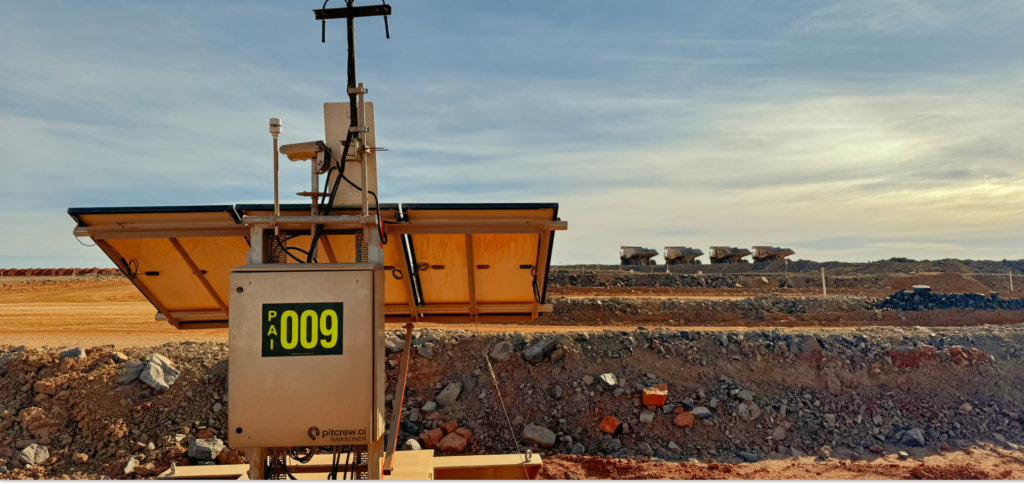
Pitcrew AIS uses FLIR thermal imaging, computer vision and edge processing to inspect tyres, brakes, hubs and bearings as haul trucks pass at normal operating speed. It is fleet-agnostic, requires no vehicle modifications and adds no production delay. Multi-pass trending and configurable Trigger Action Response Plans (TARPs) let maintenance teams validate a finding before committing resources.
The mechanism is conversion, not prevention. A planned tyre removal takes roughly 4–6 hours; an unplanned failure event takes 48–96 hours. A single unplanned tyre event costs approximately US$80,000–400,000, with an industry average near US$180,000, and nine in ten failed tyres are damaged beyond repair, so the casing value disappears with the tyre. A 50-truck ultra-class fleet faces US$8–12 million a year in expected tyre failure costs. A modelled 10–15% reduction represents US$800,000–1.8 million in annual recovery.
The guardrails matter. Pitcrew AIS provides approximately 95% sensitivity for tread separations producing a thermal signature above the detection threshold. Detection depends on line of sight, so the system cannot inspect the far sidewall, and thick snow, mud or material covering the tyre surface limits thermal visibility. Thermal inspection is one layer in a multi-method tyre programme. It does not replace pre-start inspections, manual checks or TPMS.
How Does Better Tyre Management Increase Haul Fleet Availability?
Better tyre management increases capacity by removing avoidable downtime and keeping more trucks available for productive hauling.
Industry-average mechanical availability sits near 85%, against 92–95% at world-class operations. Closing that gap across a 50-truck fleet is equivalent to adding roughly four trucks of productive capacity without buying a single unit.
Fewer roadside failures means haul cycles, maintenance planning and production targets stop being rewritten mid-shift. Reliable condition data also improves tyre inventory planning and directs road maintenance to the sections actually causing damage. Fleet-wide data surfaces patterns by vehicle, location, tyre position and operating condition that individual removal reports miss, which is the practical difference between predictive and reactive maintenance.
What Should a Mine Site Measure Before Reducing Tyre Costs?
Establish a baseline for tyre life, premature removals, failure costs, road condition, inflation compliance and availability before setting any savings target.
A workable measurement set covers tyre cost per operating hour and per tonne moved, average achieved life against design-life expectation, premature removal rate with reason codes, the planned-versus-unplanned removal split, casing repair and retread recovery rates, inflation compliance, payload distribution, TKPH exposure, road-condition exceptions, and truck downtime hours attributable to tyre events.
Present the resulting savings case as a modelled range against your own data, not a guarantee. Assess technology investments on whether they reduce failure exposure, protect casing value and improve maintenance planning. Payback on autonomous inspection at mine sites is generally measured in months rather than years, but the figure varies by site.
Model the savings against your own fleet
Test these ranges against your own fleet size, tyre spend and failure history, then request a site assessment or demonstration to see how autonomous thermal inspection fits your existing tyre programme.
Frequently Asked Questions
The fastest starting point is identifying avoidable road hazards, inflation deviations and repeat premature-removal causes before adding new controls. Work the highest-frequency and highest-cost failure modes at your site rather than rolling out generic initiatives that address neither.
No. Condition monitoring supports a broader tyre-management programme but does not replace pre-start checks, scheduled maintenance inspections or other required procedures. Pitcrew AIS provides continuous external thermal monitoring in the gaps between manual inspection events, when most damage progresses.
No. Pitcrew AIS complements TPMS. TPMS monitors internal pressure and cavity temperature; Pitcrew AIS monitors external tread surface temperature and the visible thermal signatures of structural damage. Combining internal and external condition data gives a far more complete picture than either source alone.
Savings depend on fleet size, tyre value, failure frequency, downtime cost per hour and casing recovery rates. A 50-truck ultra-class fleet may model US$800,000–1.8 million in annual savings from a 10–15% reduction in expected tyre failure costs. That is a modelled range, not a guaranteed outcome.
No. Tyre life, downtime cost and savings outcomes vary by commodity, truck class, tyre specification, haul road quality, climate, maintenance practice and operating conditions. Any credible business case needs a site-specific assessment built on your actual tyre and operational data.