

What Causes Tread Separation in Mining Tyres (and How to Catch It Before It Fails)
TL;DR
Tread separation rarely shows on the surface until it fails. Learn what causes it, the warning signs and how thermal inspection finds it.
Key Takeaways
- Tread separation occurs when tread or reinforcing layers detach from the tyre casing. The detached layers rub together, creating localised heat that drives further separation.
- The five primary causes are tonne-kilometres-per-hour (TKPH) exceedance, underinflation, cuts and road damage, excessive heat, and tyre age or degradation.
- A Tyre Pressure Monitoring System (TPMS) watches the inside of the tyre and isn’t designed to detect external tread separations. In one documented Queensland incident, internal sensors gave no warning before an external tread fire destroyed the truck.
- Normal Off-The-Road (OTR) tread surface temperature is 60 to 80°C. A separation can run 20 to 50°C or more above the surrounding tread, and thermal imaging can detect that difference before visible signs appear.
- Rubber starts to degrade from about 150°C. Pyrolysis starts from about 250°C, and the gases it produces can ignite above about 400°C. No surface reading guarantees a set amount of time before failure, so a confirmed hot spot needs action under site procedures.
What Is Tread Separation?
Every pneumatic tyre is built from layers of rubber and reinforcing cord bonded together during vulcanisation. That applies to a passenger car, a prime mover and an ultra-class haul truck alike. Tread separation is what happens when that bond fails and the tread, or the reinforcing plies beneath it, start to lift away from the casing. On a car, the usual symptoms are a bulge, a vibration at speed or a strip of tread thrown off on the highway.
OTR tyres raise the stakes. They carry far heavier loads, run hotter and cost US$30,000 to 70,000 each, depending on size, brand and contract. A separation inside an OTR tyre can progress to a tyre fire or pyrolysis explosion. At that point a maintenance problem has become a site safety event.
What Causes Tread Separation in OTR Tyres?
Most separations trace back to one or more of five factors. Each one either weakens the bond between layers or adds heat faster than the tyre can shed it.
- TKPH exceedance. Every OTR tyre has a TKPH rating that sets its thermal capacity. Overloading or excess speed pushes internal heat past that limit. These failures frequently show no external warning before the event.
- Underinflation. Low pressure increases casing flex, and flex generates heat. Running 10% underinflated cuts tread life by up to 27%. A Queensland Coroner found that underinflation exposes a tyre to sidewall failure and recommended the industry adopt remote tyre pressure monitoring.
- Cuts and road damage. A cut in the tread lug lets moisture reach the steel reinforcing layers. Western Australian regulators documented a case where cut damage caused “progressive corrosion and separation damage” and a blowout 15 days later.
- Excessive heat. High ambient temperatures leave the tyre less capacity to shed the heat it generates, and rubber starts to degrade from about 150°C.
- Tyre age and degradation. Rubber compounds lose elasticity as they age and separate more readily under load.
How Does a Separation Develop Inside the Tyre?
One documented trigger is surprisingly ordinary. A truck parks on a fist-sized rock in the loading bay, and as the loader fills the tray, the tyre bounces on that rock until layers in the tread pack begin to part. When the loaded truck rolls out, the separated rubber rubs against itself and heats up.
That heat weakens the adjacent bonds, so the separation grows. A larger gap means more friction, and more friction means more heat. The damage pushes through the tread pack in the direction of rotation, like a blister being pushed along, until the tyre is pulled from service or the outer rubber cracks and exposes the superheated pocket to air.
Sealed versus venting separations
A venting separation has a crack or fault that lets some heat escape, so it builds more slowly and sometimes shows surface discolouration. A sealed separation sits under intact rubber with no escape path. Internal temperatures climb while the surface looks only moderately warm, which makes sealed separations the greater hazard.
How Does Tread Separation Differ from a Blowout?
A separation is a progressive failure. A blowout is one possible end point, reached when the casing can no longer hold inflation pressure. Progression speed varies with load, speed and the type of separation, from days down to a single shift. Because the damage builds over time rather than all at once, there is a window in which the tyre can be found and removed before it fails.
What Are the Warning Signs of Tread Separation?
Normal OTR tread surface temperature sits between 60 and 80°C, depending on ambient temperature, load and haul profile. A tread separation can run 20 to 50°C or more above the surrounding tread. Because baselines shift from site to site and shift to shift, the difference from the surrounding tread matters more than any single reading.
Visible signs arrive late. Mud on haul truck tyres hides surface defects, and manual inspection is a sample taken once a shift at best.
| Observation | What it may indicate | Next action |
|---|---|---|
| Localised hot spot compared with the surrounding tread | Separated layers generating friction heat | Review the thermal trend across passes and assess it against the site's Trigger Action Response Plan (TARP) |
| Hot spot recurring or growing at the same location | Active, propagating separation | Escalate under the TARP and arrange a controlled inspection |
| Visible deformation, bulging or blistering in the tread | Advanced separation with compromised casing integrity | Take the truck out of service under site procedures for assessment by qualified tyre personnel |
| Smoke or a burning rubber smell | Rubber degradation or pyrolysis under way, with fire or explosion risk | Treat as an emergency. Follow site isolation and exclusion procedures and do not approach the tyre |
Smoke or a burning smell is never a cue to take a closer look. Move away and follow site procedures.
Why Doesn't TPMS Detect Tread Separation?
A Tyre Pressure Monitoring System (TPMS) uses sensors inside the tyre to read cavity pressure and temperature. Tread separation is a structural failure in the outer layers, and it changes cavity pressure very little until it is well advanced. Heat concentrated at one spot on the tread barely shifts the average cavity temperature.
A Queensland rear dump truck reported in the Coal Mines Inspectorate’s July 2022 incident periodical was destroyed by fire from tread separation. The regulator’s report stated that “Internal tyre temp & pressure sensors did not indicate the likelihood of an external tyre tread fire”.
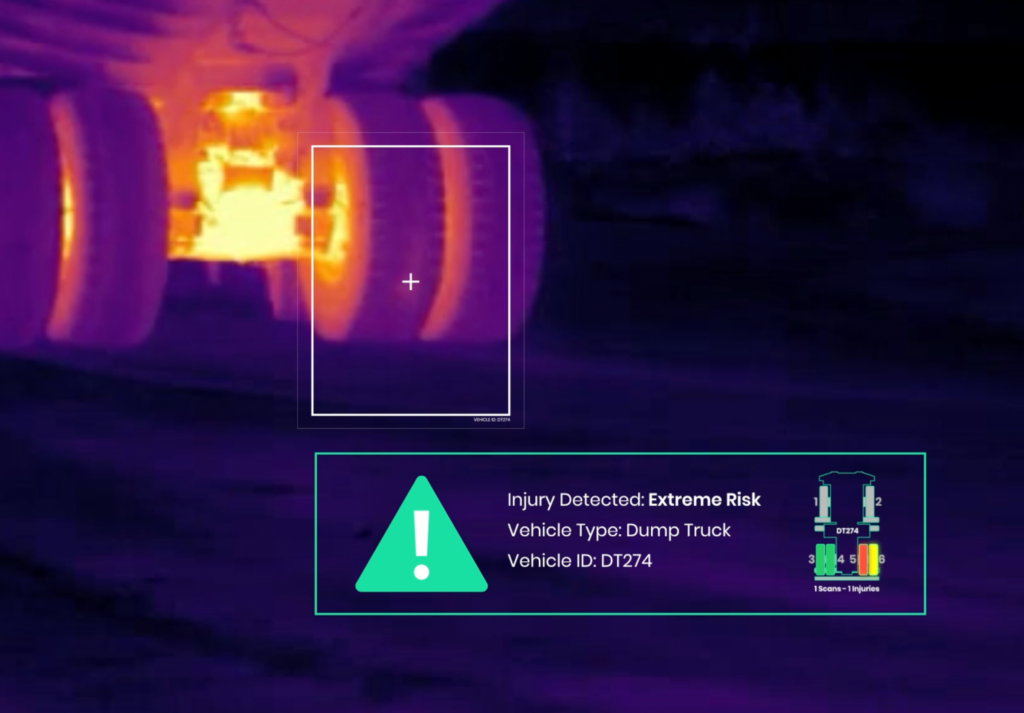
External thermal inspection, such as the Pitcrew Autonomous Inspection System (AIS), looks at the outside of the tyre instead.
| TPMS | Pitcrew AIS | |
|---|---|---|
| Where it looks | Inside the tyre | Outside the tyre |
| What it measures | Pressure and cavity temperature | Tread surface temperature patterns linked to structural damage |
| Main job | Inflation discipline | Early detection of tread separation and external damage |
Pitcrew AIS complements TPMS. It does not replace it.
How Does Thermal Imaging Detect Tread Separation?
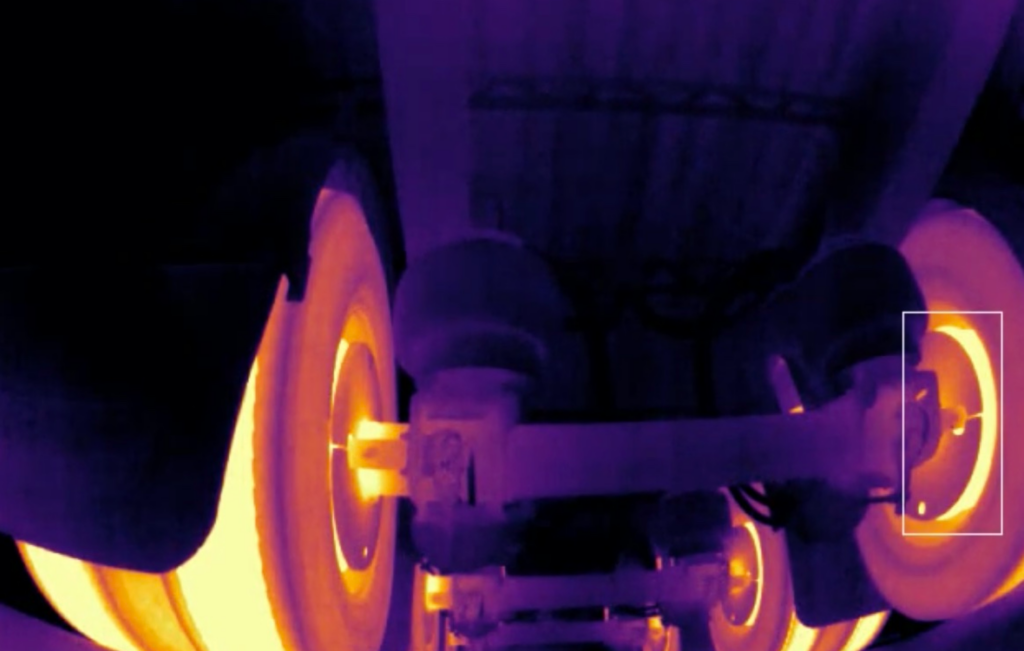
Rubber has a high emissivity, so nearly all the infrared energy a camera reads comes from the tyre itself rather than reflected surroundings. A separation shows up as a well-defined hot spot against cooler tread.
Pitcrew AIS places FLIR thermal cameras at the roadside and scans every tyre on every truck as it passes at normal speed, 24/7. It achieves approximately 95% sensitivity for tread separations producing a thermal signature above the detection threshold. Pitcrew AIS completed more than 672,000 tyre inspections in the 12 months to early 2026 and is deployed across Australia, North America, South America, Africa and Asia.
It has limits. Detection needs line of sight, and the system cannot see the far sidewall. A light film of dirt that hides a defect from the eye does not necessarily block the thermal signature, but thick mud, snow or material on the tyre limits thermal visibility. Thermal inspection is one layer in a tyre programme and does not replace pre-start checks. For detection methods in more depth, see our guide to thermal imaging for tyre faults.
What Happens If Tread Separation Is Not Detected?
The heat cycle keeps running. Rubber starts to degrade from about 150°C, and pyrolysis starts from about 250°C, releasing flammable gases and building internal pressure whether the tyre is filled with air or nitrogen. Above about 400°C those gases can ignite. The result is an external tyre fire or a pyrolysis explosion that can project debris up to 300 metres. In one NSW incident, a haul truck’s tyres exploded minutes after a lightning strike and threw a 250 kg wheel flange about 275 metres.
A minimum 300 metre exclusion radius for at least 24 hours is now standard practice for confirmed or suspected hot tyre events, as set out by the NSW Resources Regulator and Resources Safety and Health Queensland. The Queensland truck fire reported in the July 2022 incident periodical likely followed tread separation from poor road conditions. For the full cost picture, see what an OTR tyre failure costs.
This is general information, not legal advice. Confirm your obligations with the relevant regulator.
How Can Mining Operations Prevent Tread Separation?
Prevention targets the five causes:
- Hold target inflation with regular cold-pressure checks and TPMS.
- Keep speed and payload within rated TKPH limits using payload management and haul road speed controls.
- Maintain haul roads to cut down the debris that starts separations.
- Scan every tyre on every pass to close the gap between scheduled inspections.
The wider routine is covered in our guide to OTR tyre fire prevention.
Responding to a flagged hot spot
When a hot spot is flagged on repeat passes, a typical response runs like this:
- Review the thermal image and the trend across previous passes.
- Assess the reading against the site’s TARP.
- Arrange a controlled inspection of the tyre.
- Record the maintenance decision against the asset.
Removal or repair decisions rest with qualified site personnel under site procedures. A thermal alert is not a repairability assessment.
Frequently Asked Questions
It is one of the most frequently documented causes of OTR tyre fires. Regulatory investigation reports from Queensland and Western Australia identify separation as the root cause or a primary contributing factor in multiple incidents.
That depends on how far the separation has spread and where it sits. Separations caught before significant heat damage can leave the casing worth assessing for repair or retreading. The call belongs to qualified tyre personnel after a physical inspection.
Look for a localised hot spot 20 to 50°C or more above the surrounding tread, against a normal tread surface of 60 to 80°C. The difference from the surrounding tread is the indicator, not an absolute number.
No. A separation found early and pulled from service does not progress to fire. The fire risk comes from separations that keep running until temperatures reach the pyrolysis range.
Want to see how Pitcrew AIS would work on your haul roads?
Request a demo to talk through your fleet, haul profile and site conditions.