

How to Extend OTR Tyre Life in Mining
TL;DR
How to extend OTR tyre life in mining, from haul roads, inflation and TKPH to repairing damage at rotation before it ends a tyre early.
Key Takeaways
To extend OTR tyre life, maintain haul roads, keep inflation and payloads within specification, and match tyres to the site’s tonne-kilometres per hour (TKPH) demands. Find damage early, especially on the front steer tyres, so it can be repaired at the planned rotation to the rear instead of ending the tyre’s life. Results depend on haul road condition, commodity, climate and fleet practices at each site.
How long should OTR tyres last in mining operations?
OTR tyre life in mining varies widely. Commodity, terrain, ambient heat and site management practices account for most of that spread.
| Operation | Relative tyre life | Main driver |
|---|---|---|
| Pilbara iron ore | Shortest | Sharp, abrasive rock and high ambient temperatures |
| Coal | Longer | Softer terrain |
| Canadian oil sands | Longest | Controlled haul roads and lower ambient heat |
The best documented result is 10,119 hours at the Rossing Uranium Mine in Namibia, recorded by the Southern African Institute of Mining and Metallurgy (SAIMM).
Most tyres fall well short. Industry research estimates that approximately 90% of ultra-large mining tyres never reach their intended wear-out life, and puts premature removals at 33 to 49%, caused by operational damage rather than tread wear. Tread separation is one of those causes, covered in our article on detecting tread separation and other tyre faults with thermal imaging.
What has the biggest impact on OTR tyre life?
Haul road condition outweighs every other variable. No tyre specification or monitoring system offsets a poorly maintained road.
A practical maintenance sequence for dump truck tyres works through the controllable factors in order:
- Inspect and clear haul road hazards. Remove spillage and loose rock, grade out ruts and fix poor drainage, starting at loading areas, dump points and tight corners where spillage collects.
- Check inflation and loading. Confirm cold pressures against specification and review payload data for overloaded or unevenly loaded trucks, which add sidewall stress and heat.
- Review speed and TKPH against the haul profile. Long ramps, high speeds and hot weather push tyres towards their thermal limit. Recalculate site TKPH whenever routes or cycle times change.
- Investigate abnormal wear or heat. Irregular wear, repeated pressure alarms or thermal anomalies point to a root cause such as alignment, road damage or a developing internal fault. Rotate tyres between front and rear positions based on wear patterns.
- Record removal reasons. Log every removal by cause, position, hours and route. Individual failures then become trend data that shows which control to fix next.
Operator behaviour runs through every step, so operator training supports each of these controls.
How does inflation management extend tyre life?
A tyre running 10% below target pressure loses up to 27% of its tread life and generates more heat in the casing.
The gain from correcting inflation depends on how far below target a fleet currently runs. A Tyre Pressure Monitoring System (TPMS) gives continuous pressure readings across the fleet, so crews correct deviations before heat damage accumulates instead of waiting for the next gauge check.
What role does TKPH compliance play in tyre longevity?
TKPH is a tyre’s thermal capacity rating. It sets the workload a tyre can sustain before internal heat compromises its structure. Running above the rated TKPH builds heat inside the tyre and leads to tread separation, tread chunking and catastrophic failure, often with no visible external warning.
Ratings vary by size and compound. A cut-resistant compound typically carries a lower TKPH rating than a standard compound in the same size, so specifying for cut protection on a long, hot haul trades one risk for another.
Calculate site TKPH during procurement, then validate it against actual payloads, cycle times and ambient temperatures. That check also shows whether premature removals stem from thermal overload or road damage, which need different fixes.
How does monitoring technology extend tyre life?
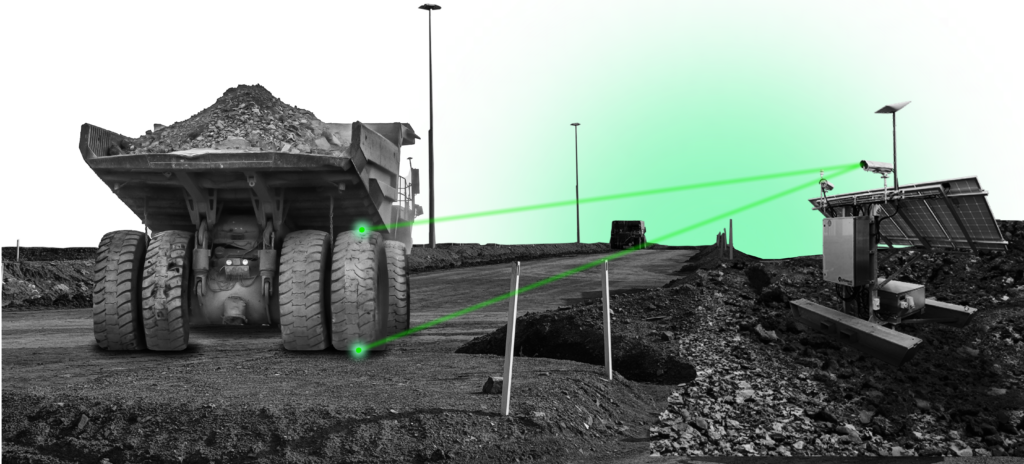
Monitoring extends tyre life by catching faults while a tyre can still be removed, assessed and potentially saved. TPMS and external thermal inspection, such as the Pitcrew Autonomous Inspection System (AIS), do different jobs.
| TPMS | Pitcrew AIS | |
|---|---|---|
| What it measures | Inflation pressure and cavity temperature | Tread surface temperature patterns |
| Where it looks | Inside the tyre | Outside the tyre, as the truck passes |
| Typical faults found | Underinflation, slow leaks, high cavity temperature | Tread separations and localised hot spots |
| Fitment | Sensor in each tyre | Roadside station, no vehicle modifications |
Pitcrew AIS uses FLIR thermal cameras and computer vision to inspect every tyre on every pass, 24 hours a day, with no vehicle stoppage. Normal OTR tread surface temperature sits at 60 to 80°C, depending on ambient temperature, load and haul profile. A tread separation runs 20 to 50°C or more above the surrounding tread. The system flags that difference rather than an absolute reading, so detection doesn’t hinge on a fixed temperature that shifts with weather and load.
Pitcrew AIS has approximately 95% sensitivity for tread separations producing a thermal signature above the detection threshold. It completed more than 672,000 tyre inspections in the 12 months to early 2026, deployed across Australia, North America, South America, Africa and Asia.
Thermal inspection has limits. It needs line of sight, cannot see the far sidewall, and thick mud, snow or material on a tyre limits thermal visibility. It complements TPMS rather than replacing it, and it does not replace pre-start checks. Manual inspection is a sample, taken once a shift at best. Continuous thermal inspection covers the passes in between.
Do autonomous haul systems improve tyre life?
Autonomous Haulage System (AHS) operations can improve tyre life. One Caterpillar customer’s five-year study at an iron ore operation reported 35% improved tyre life with autonomous haulage. Consistent acceleration and braking, steady speeds, precise path following and fewer aggressive turns all reduce lateral and sidewall stress.
The global autonomous haul truck fleet reached 3,832 units by July 2025, up 84% on the year before, and no operator is on board to notice a problem between scheduled maintenance windows. Automated inspection becomes the main source of in-service tyre condition data on autonomous haulage fleets.
How does repairing tyres at rotation extend their life?
In Australian mining, repair is a bigger lever than retreading. New tyres go on the front steer positions, one and two, so the front tyres carry the most tread and offer the best economics for repair.
Damage on a front tyre often starts before it is visible. Pitcrew AIS can pick up that early damage on the fronts, so it can be repaired during the planned rotation to the rear. The repaired tyre then delivers its full run-out life on one of the four rear positions instead of being scrapped early.
Rotation is already planned maintenance, so the repair happens without an extra unplanned stop.
When is an OTR tyre suitable for repair or retreading?
A qualified tyre specialist makes the call, not the operator or the monitoring system. The sequence is:
- Remove the suspect tyre from service once damage, a pressure alarm or a thermal anomaly is confirmed.
- Have a qualified tyre specialist inspect the injury and the full casing.
- Decide on repair, retreading or disposal based on those findings.
Three factors decide suitability: where the injury sits, how far the damage extends and the condition of the casing. Early removal improves the chance of saving a casing because the damage has less time to spread under load. But it doesn’t guarantee the tyre can be repaired or retreaded.
Can retreading extend OTR tyre life economically?
Retreading is a secondary option, and how common it is varies by region. In Australia it is less common, because shipping casings to a retread plant and back changes the economics. Where retreading is available, fewer casings qualify at operations with poor haul roads and high damage rates. Retread life varies with the casing, the haul and the retread specification, so track it on site rather than assuming it matches a new tyre.
Repair or retread: what each one does
| OTR tyre repair | Tyre retreading | |
|---|---|---|
| Purpose | Fixes an assessed injury in a serviceable tyre | Replaces worn tread on an approved casing |
| Condition | Injury location and size fall within repairable limits | Casing passes specialist inspection |
| Outcome | Tyre returns to service in its current life | Casing starts another life |
Judge both on cost per operating hour across the tyre’s full life, not on purchase price. Add inspection, removal, repair or retread and refitting costs, then divide by total hours delivered across every life of the casing. A cheaper retread that fails early can cost more per hour than a new tyre. For pricing, see OTR tyre costs. For the cost of failures that destroy casings, see what an OTR tyre failure costs.
Every control that extends first-life survival, from inflation and load discipline to road maintenance and thermal monitoring, also raises the share of tyres that can be repaired or retreaded. Tyre life management multiplies lifecycle value.
Frequently Asked Questions
It varies widely by commodity and site. Abrasive iron ore operations see the shortest tyre life, coal operations longer and oil sands the longest. The best documented result is 10,119 hours at the Rossing Uranium Mine in Namibia.
TPMS works mainly by keeping inflation on target, and running 10% below target pressure can cost up to 27% of tread life. The actual gain depends on how far below target the fleet ran beforehand and how quickly crews respond to alerts.
Yes. Cuts and impacts from road debris are one of the main causes of premature removal. No tyre specification or monitoring system offsets a poorly maintained road.
TKPH is the thermal capacity rating assigned to each OTR tyre. Exceeding it builds internal heat that leads to tread separation and catastrophic failure, so tyre selection must match actual site TKPH demands.
TPMS covers the inside of the tyre: pressure and cavity temperature. External thermal inspection such as Pitcrew AIS covers the outside, detecting tread separations as a temperature difference from the surrounding tread. Together they cover more failure modes than either alone, with results varying by site conditions and fleet composition.
Want to see how Pitcrew AIS would work on your haul roads?
Request a demo to talk through your fleet, haul profile and site conditions.